









If the peptide you mean is one that increases growth hormone/GH signaling—such as GHRP-6, GHRP-2, ipamorelin, or MK-677/ibutamoren—then glucose and insulin sensitivity are legitimate concerns. The FDA notes that some of these substances can increase blood glucose by reducing insulin sensitivity.
U
U.S. Food and Drug Administration
+1
The safest ways to reduce the risk are:
Don't try to counteract it with insulin or glucose-lowering medication on your own. That can cause dangerous hypoglycemia, particularly around workouts.
Monitor your glucose. If you're using a substance that affects GH, discuss fasting glucose and HbA1c testing with your doctor. A CGM can sometimes be useful for identifying patterns, but abnormal readings should be confirmed appropriately.
Keep your diet consistent. Emphasize high-fiber carbohydrates, vegetables, lean protein, and minimally processed foods, while limiting large amounts of sugary drinks and highly refined carbohydrates.
Exercise regularly. Resistance training plus aerobic activity generally supports insulin sensitivity. Avoid assuming that simply training harder will cancel out a peptide's metabolic effects.
Prioritize sleep and healthy body composition. Poor sleep and excess body fat can independently worsen insulin sensitivity.
Don't increase the peptide dose to chase results. If glucose or HbA1c starts worsening, the appropriate response is to discuss reducing/stopping the causative substance with a healthcare professional rather than adding another drug.
Get medical advice if your glucose is repeatedly elevated. Growth-hormone-related therapies can produce glucose intolerance and, in some circumstances, diabetes.
F
FDA Access Data
One important point: there isn't a reliable supplement that can simply “protect” you from peptide-induced insulin resistance. If the peptide itself is causing the problem, addressing the underlying exposure is more appropriate than trying to mask the effect.
If you tell me which peptide you're taking (e.g., ipamorelin, CJC-1295, MK-677, GHRP-6, etc.), your dose, and whether you're currently seeing elevated glucose, I can explain the specific glucose/insulin risks and what monitoring would be sensible.
Web in my bio
Note that images are just for educational purposes
U
U.S. Food and Drug Administration
+1
The safest ways to reduce the risk are:
Don't try to counteract it with insulin or glucose-lowering medication on your own. That can cause dangerous hypoglycemia, particularly around workouts.
Monitor your glucose. If you're using a substance that affects GH, discuss fasting glucose and HbA1c testing with your doctor. A CGM can sometimes be useful for identifying patterns, but abnormal readings should be confirmed appropriately.
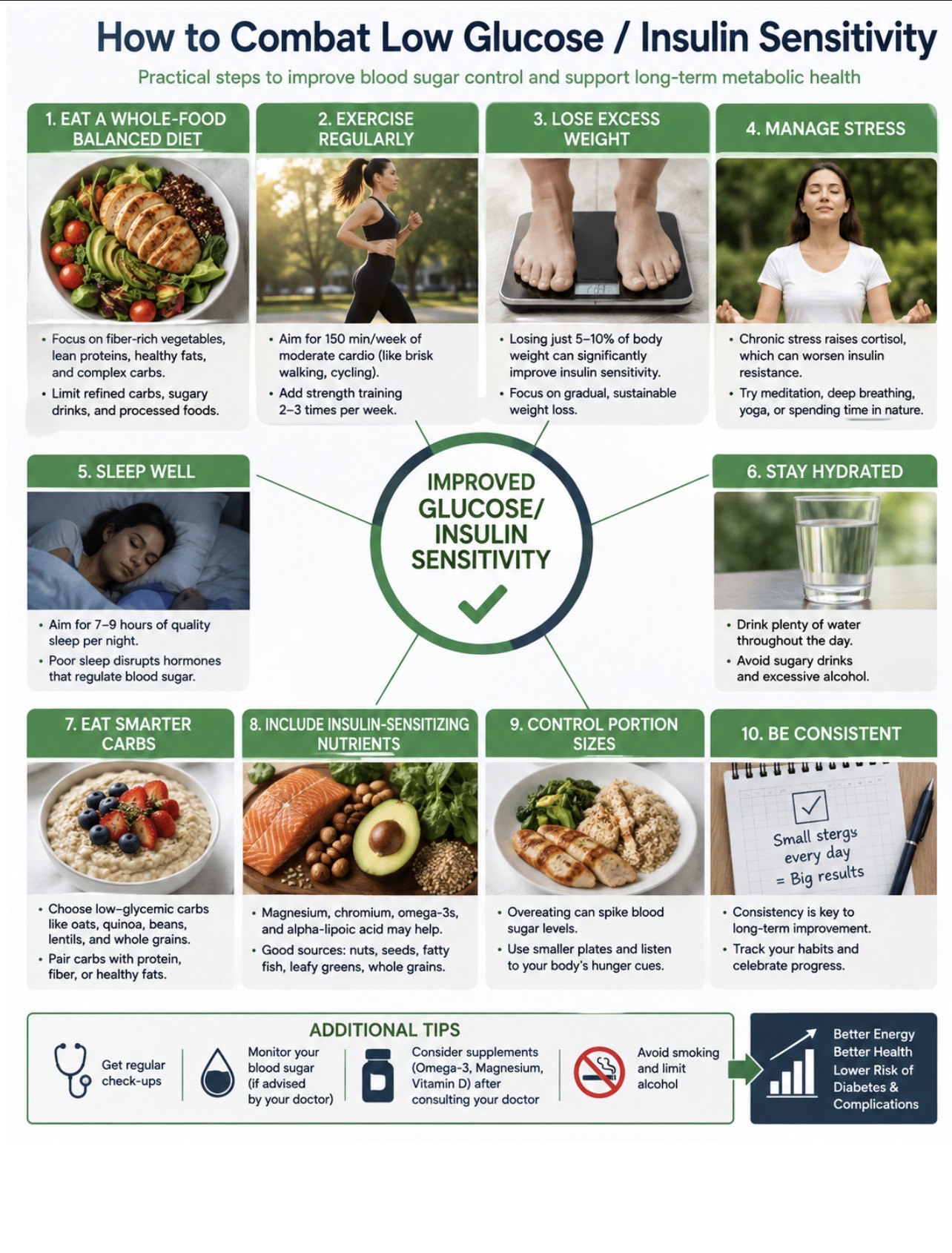
Keep your diet consistent. Emphasize high-fiber carbohydrates, vegetables, lean protein, and minimally processed foods, while limiting large amounts of sugary drinks and highly refined carbohydrates.
Exercise regularly. Resistance training plus aerobic activity generally supports insulin sensitivity. Avoid assuming that simply training harder will cancel out a peptide's metabolic effects.
Prioritize sleep and healthy body composition. Poor sleep and excess body fat can independently worsen insulin sensitivity.
Don't increase the peptide dose to chase results. If glucose or HbA1c starts worsening, the appropriate response is to discuss reducing/stopping the causative substance with a healthcare professional rather than adding another drug.
Get medical advice if your glucose is repeatedly elevated. Growth-hormone-related therapies can produce glucose intolerance and, in some circumstances, diabetes.
F
FDA Access Data
One important point: there isn't a reliable supplement that can simply “protect” you from peptide-induced insulin resistance. If the peptide itself is causing the problem, addressing the underlying exposure is more appropriate than trying to mask the effect.
If you tell me which peptide you're taking (e.g., ipamorelin, CJC-1295, MK-677, GHRP-6, etc.), your dose, and whether you're currently seeing elevated glucose, I can explain the specific glucose/insulin risks and what monitoring would be sensible.
Web in my bio
Note that images are just for educational purposes